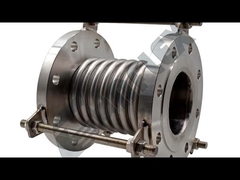
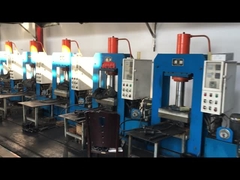
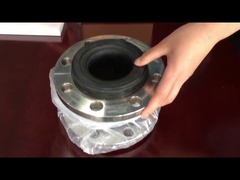
Brief: From concept to demonstration, this video highlights the evolution and practical outcomes of the metal bellows manufacturing process. You will see how DIN Stainless Steel Flexible Hose Braided is constructed, from the corrugated inner core to the protective outer braiding, and learn about its performance in demanding industrial applications.
Related Product Features:
Gemaakt met gegolfde roestvrijstalen balgen voor flexibiliteit en een gevlochten buitenlaag voor extra sterkte.
Biedt uitstekende corrosiebestendigheid voor langdurige prestaties in zware omgevingen.
Werkt effectief over een breed temperatuurbereik van -196°C tot 420°C.
Beschikt over een lichtgewicht en compact ontwerp voor eenvoudige installatie en ruimtebesparing.
Available in customizable diameters from DN6 to DN700 to suit various system requirements.
Provides high flexibility with specified minimum bending radii for static and dynamic applications.
Designed to meet international standards including GB, ISO, DIN, ANSI, BS, and JIS.
Suitable for diverse industries such as aviation, chemical, power, and food processing.
Vraagstukken:
What materials are used in the construction of the DIN Stainless Steel Flexible Hose Braided?
The hose features an inner core made from corrugated stainless steel (grades 304, 321, or 316L) and an outer braiding layer made from 304 stainless steel, providing both flexibility and strength.
What is the temperature and pressure range for this flexible hose?
The hose operates effectively in temperatures from -196°C to 420°C and supports working pressures that vary by diameter, ranging from 1.6 MPa to 20 MPa depending on the braid configuration (single or double).
Can the hose be customized for specific applications?
Yes, the hose is available in customizable diameters from DN6 to DN700, and the manufacturer offers mold customization, OEM services, and free samples to meet specific customer requirements.
In which industries is this flexible hose commonly used?
It is widely used in aviation, aerospace, petroleum, chemical, metallurgy, electric power, papermaking, textiles, construction, medicine, food, tobacco, and communication industries.